
Fight Tycoon
Exceptional Hong Kong LimitedStrategy
4.5310.00 Reviews
- Version
- 9.3.100
- Installs
- 100.00K
- Age Rating
- Teen
Screenshots



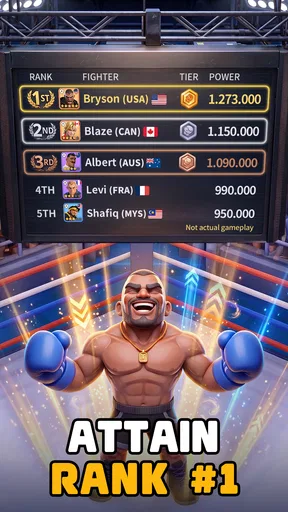
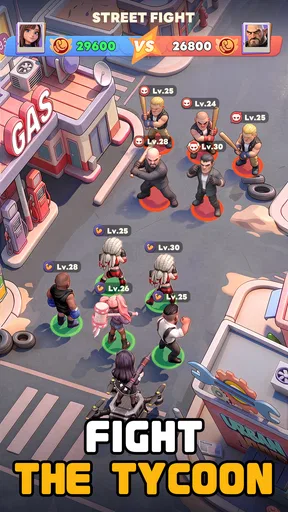

Our Review of Fight Tycoon
 Analysis by Appyee
I found Fight Tycoon most interesting when I treated it as a short, shared-device strategy game rather than something to leave running in the background. Its basic appeal is easy to understand: you drive, make tactical decisions, and try to survive situations where a careless choice can undo a promising run. That combination gives it a different rhythm from a conventional driving game, because steering alone is not the whole challenge. You also have to think about timing, risk, and what your next move is likely to cost.
The game comes from Exceptional Hong Kong Limited and is free to download. It sits in the strategy category, although its driving element makes the experience more active than a menu-heavy planning game. I can imagine it fitting naturally into a household where one person plays for a few minutes, hands the device to someone else, and compares decisions afterward. It is not the sort of title I would recommend blindly to everyone, though. The Teen content rating matters, and the survival-focused conflict may not suit younger children or players looking for a calm, purely casual driving experience.
How Fight Tycoon Works on a Shared Device
The most practical way to use this game in a household is to treat each session as a self-contained challenge. If I were passing a phone or tablet between family members, I would let one player complete a run or reach a natural stopping point before handing it over. That keeps the experience fairer than constantly interrupting someone during a decision, and it makes comparisons more useful: each person can explain why they took a particular route, accepted a risk, or chose a safer option.
That shared-device approach also reveals one of the game’s strongest qualities. Driving creates immediate involvement, while strategy gives spectators something to discuss. A person waiting for a turn is not just watching a vehicle move; they can question whether the player is being too aggressive or wasting an opportunity. In my experience, that kind of conversation makes a simple mobile game more engaging than solitary tapping, especially when players have different instincts.
There is a trade-off. A game built around survival and tactical choices can become tense when several people are watching. Some players enjoy that pressure, while others dislike receiving advice while they are still learning. I would establish a simple household rule: the person holding the device makes the final decision, and suggestions wait until the run is over unless help is requested. That keeps coordination enjoyable instead of turning every attempt into an argument.
For a commuter, a short break, or a quick evening session, the driving-and-strategy blend has a useful advantage over slower strategy games. You can become involved quickly without first studying a long rulebook. At the same time, it asks for more attention than an idle title. I would not start a serious attempt while cooking, crossing a street, or doing anything that divides concentration. The action may look accessible, but survival decisions are easier to regret when I am distracted.
What to agree on before the first session
Because the game is free, the first question in a household is not whether everyone can try it. The more useful question is who should try it and under what conditions. I would begin with the Teen rating in mind, particularly if the device is shared with children. The rating is not a substitute for a parent’s own judgment, but it is a clear signal to look at the game’s conflict-oriented tone before making it part of a younger child’s regular play.
I would also decide whether the device is being used for individual progress or casual turn-taking. Those are different expectations. If one person wants to concentrate on improving their own performance, passing the device around may be frustrating. If the purpose is friendly competition, then short turns and a clear order work better. This distinction sounds minor, but it prevents the common household problem where one player thinks the game is communal while another thinks the device is reserved for personal progress.
Another useful boundary is deciding when advice is allowed. Fight Tycoon invites discussion because its choices are visible, but constant coaching can remove the satisfaction of discovering a workable approach. I prefer a two-stage routine: silent play during the attempt, followed by a brief review afterward. That gives the player room to develop judgment and gives everyone else a chance to point out patterns without taking control.
I would avoid promising that the game is suitable for every age simply because it is on a mobile device. Its Teen classification should be part of the setup conversation, not an afterthought. In a mixed-age home, older players can use it as a shared challenge while younger children choose another game. That is a more sensible arrangement than assuming the same content works equally well for every person who uses the phone.
Coordination without turning play into supervision
The strategic side creates natural opportunities for coordination, but it works best when players compare reasoning rather than simply announcing the correct answer. When I play, I pay attention to whether a decision is helping me survive the current moment or merely making the next moment harder. That distinction is especially useful when another household member is watching, because it gives the conversation a concrete focus: was the move a calculated risk, or was it made because it looked exciting?
A good shared routine is to let each player describe their plan in one sentence before acting. It might be as simple as choosing a safer line, preserving flexibility, or accepting danger for a better position. Afterward, the group can judge the plan by its result without mocking the person who made it. This turns the game into a small exercise in decision-making and makes the strategy layer more visible to someone who might otherwise see only the driving.
I would not use the game as a test of who is “best” after only a few attempts. Different players may prefer different levels of risk, and a cautious approach can look slow while still being sensible. A better comparison is whether someone understands why a run failed and changes their next decision accordingly. That is where the game’s repeat-play value seems strongest: not in memorizing one perfect sequence, but in learning how to respond when a plan stops working.
There is also a practical device-sharing issue: interruptions. If a call, message, or household task takes priority, the player should stop at a safe point rather than assume the game will preserve every moment exactly as expected. I would not begin a high-focus attempt when I know I may need the device immediately. This is less about a missing feature and more about respecting the game’s active nature; a strategy decision made in a hurry is rarely a satisfying one.
Why the game feels different from ordinary alternatives
Compared with a standard driving game, Fight Tycoon asks me to think beyond movement. A pure driving title usually rewards control, reaction speed, and familiarity with the course. Here, the driving is part of a broader survival problem, so a technically confident player can still make poor choices if they ignore the strategic consequences. That makes it a better fit for someone who wants driving to have context rather than existing only as a test of handling.
Compared with a traditional turn-based strategy game, it is more immediate. I do not have the same luxury of calmly examining every option before acting. The vehicle-focused presentation gives decisions a sense of momentum, which can make the game more approachable for people who find classic strategy interfaces too abstract. The cost is that players who enjoy deep planning, extensive menus, or long-term empire management may find this experience too direct.
The “tycoon” name might also suggest a management simulator to some players, so I would set expectations carefully. The store short description calls it “Fight Tycoon,” but the central appeal I experienced is the combination of survival, driving, and tactical judgment. I would not choose it expecting a conventional business-building game. Someone looking for detailed economic systems should probably choose a dedicated management title instead.
Its survival focus gives it another clear identity. Unlike a relaxed driving game, it creates pressure around mistakes. Unlike a purely competitive action game, it leaves room to think about decisions rather than relying only on reflexes. That middle ground is the reason I would recommend it to players who enjoy adapting under pressure. It is also the reason I would skip it when I want something soothing after a long day.
Small habits that make the experience better
My first practical tip is to separate experimentation from serious attempts. Use early sessions to learn how the driving and strategic choices interact, rather than treating every mistake as a failure worth getting annoyed about. Once I understand the consequences of a decision, I can play more deliberately. This is particularly helpful on a shared device, because it lets a new player learn without feeling that they have ruined someone else’s carefully prepared run.
Second, I would pay attention to the difference between a visible opportunity and a safe opportunity. The game’s action can make the most immediate option feel automatically correct, but survival challenges often punish decisions that solve one problem while creating another. Before committing, I try to ask what the move leaves me able to do next. That brief pause is one of the simplest ways to make the strategy layer matter more.
Third, I would review failed attempts by identifying the first genuinely avoidable decision, not the final dramatic mistake. The last error is often only the point where earlier risks finally caught up. In a household discussion, this creates better feedback and avoids blaming the player for a situation that was already difficult to recover from. It also helps distinguish bad luck from a repeatable habit that needs changing.
Fourth, I would give inexperienced players a chance to play without an audience. Shared play is valuable, but some people learn faster when nobody is commenting on every movement. After that private practice, they may enjoy comparing approaches with others. This is especially important for younger teens, who may be interested in the game but not comfortable being judged by older siblings or adults.
Finally, I would keep the device’s role clear. If it is a family tablet used for schoolwork, calls, or household tasks, set a stopping point before starting. Fight Tycoon rewards attention, and an interrupted attempt can be disappointing. A short scheduled session is more enjoyable than trying to squeeze it between unrelated responsibilities.
Age, trust, and the limits of shared play
The Teen rating makes the game a better fit for older players than for small children. I would consider the individual child’s maturity and sensitivity to conflict rather than relying on the rating alone. A teenager who enjoys strategic competition may find the tone appropriate, while another player of the same age may prefer non-combat driving or puzzle games. The important point is to make the choice intentionally.
For parents, I would frame the game as a shared activity rather than an automatic reward or background distraction. Playing together makes it easier to understand what the child enjoys: the driving, the survival pressure, the tactical choices, or the competitive discussion. It also gives adults a natural opportunity to talk about risk-taking and frustration without turning the session into a lecture.
I would not assume that a shared device creates separate personal spaces inside the game. If several people use the same phone or tablet, agree on whose turn it is and avoid changing another player’s progress or settings casually. The safest household practice is simple: each player handles only their own session, and anything that affects the next person is discussed first. That boundary matters more than elaborate rules when a game is passed among siblings or friends.
Trust also means being honest about the game’s limits. It may encourage useful conversations about choices, but it is still entertainment, not a substitute for a dedicated educational strategy tool. I would recommend it as a way to practice patience, observation, and flexible thinking informally. I would not present it as a structured learning program or expect it to teach formal driving skills.
Performance, access, and everyday practicality
The game supports devices running Android 7.0 or later, which gives it a broad range of compatible Android hardware. That is helpful for households sharing an older phone or tablet rather than a new flagship device. Still, compatibility does not guarantee that every device will feel equally comfortable. Screen size, touch responsiveness, battery condition, and general device performance can all affect how pleasant an active driving game feels.
Since it is free, the barrier to trying it is low. I can see that helping in a household where people want to test the game before deciding whether it deserves regular space on a shared device. Free access also makes casual turn-taking easier: nobody has to justify a purchase before discovering whether the driving-and-strategy mix suits them.
The current version is 9.2.400, and the game was released on September 8, 2025. Those details are useful when identifying the correct listing or checking whether a device is looking at the current release. I would still keep normal expectations about mobile games: updates can change how an experience feels, and a player who enjoys the game should remain attentive to the version installed on the device.
The audience response is encouraging, with a 4.7 average from around 2.4 thousand ratings and more than 100 thousand installs. I read that as evidence of strong early interest rather than a guarantee that every player will enjoy it. The rating supports my impression that the core idea connects with people, but the Teen tone, active play, and strategic pressure remain important personal filters.
One practical limitation is that the game’s appeal depends on engagement. If I only want to tap through a few minutes without thinking, its decisions can feel like work rather than entertainment. Likewise, players who want a large, slow-burning strategy campaign may find the driving focus too restrictive. The right audience is someone who likes making choices under movement and pressure, not simply anyone who enjoys either cars or strategy in isolation.
My household verdict
After spending time with it, I see Fight Tycoon as a good candidate for older household members who enjoy passing a device around and discussing decisions. Its blend of driving and survival strategy gives each turn enough tension to be interesting, while the straightforward premise makes it easier to explain than a complex management simulator. I especially like it for short, focused sessions where everyone understands that the player holding the device gets to make the call.
I would recommend it to a teenager or adult who wants an active strategy game, to siblings who enjoy comparing risk-taking styles, and to a parent who is willing to play alongside a teen rather than simply hand over the device. I would skip it for young children, for anyone seeking a peaceful driving game, and for players who prefer deep economic management or long, carefully planned campaigns.
The most important household decision is not whether the game is free or popular. It is whether the family can agree on age suitability, turn boundaries, and how much advice is welcome. Once those expectations are clear, the game’s strengths become easier to enjoy. The device becomes a place for short challenges and conversation instead of a source of disputes over whose progress was changed or who interrupted a run.
My final view is positive but specific: this is best as a focused shared challenge, not a universal family game. The driving gives strategy a physical sense of momentum, and the survival structure makes each choice feel meaningful. At the same time, the Teen rating and pressure-heavy design narrow its audience. For the right household, that narrow focus is a strength; it gives players something concrete to debate, improve, and return to together.
Privacy and Permissions
See what permissions an app requests and how it handles your data.
- Photos/Media/Files
- read the contents of your USB storage, modify or delete the contents of your USB storage
- Storage
- read the contents of your USB storage, modify or delete the contents of your USB storage
- Camera
- take pictures and videos
- Wi-Fi connection information
- view Wi-Fi connections
- Other
- view network connections, full network access, run at startup, prevent device from sleeping, Google Play license check, read Google service configuration
Verdict
Strengths of Fight Tycoon
- Simple controls make it easy to start playing quickly.
- Training and management systems add strategic depth.
- Short sessions work well for casual mobile gaming.
- Progression rewards regular play and long-term planning.
- The fighting theme gives the tycoon format a fresh twist.
Limitations of Fight Tycoon
- Progress can feel slow without frequent upgrades or grinding.
- Some menus may feel crowded on smaller phone screens.
- Matches can become repetitive after extended play sessions.
- Advanced management options may take time to understand.
- Performance may vary on older devices during busy fights.
Similar Picks in This Category
View All
Clash of Clans
Supercell4.5

Plants vs. Zombies™
ELECTRONIC ARTS3.7

Lords Mobile: Kingdom Wars
IGG.COM4.5

Clash Royale
Supercell4.4

State.io — Conquer the World
CASUAL AZUR GAMES4.1

Car Driving School : Car Games
Spark Game Studios3.9
Frequently Asked Questions
What is Fight Tycoon?
Fight Tycoon is a management and strategy game centered on building and running your own fighting organization. You typically recruit and train fighters, arrange matches, improve facilities, manage finances, and make decisions that influence your reputation and progress. It combines business simulation elements with combat-focused planning, so success depends not only on winning fights but also on developing a competitive and sustainable team.
How does the gameplay work in Fight Tycoon?
The main gameplay loop involves managing fighters and preparing them for competition while expanding your organization. You may need to choose suitable training routines, schedule bouts, upgrade equipment, and balance expenses against potential rewards. Matches are influenced by preparation and fighter development, meaning the game is more about long-term planning and management decisions than simply controlling every action during a fight.
Is Fight Tycoon free to download and play?
Fight Tycoon may be available as a free download, but users should check the current store listing for the exact pricing and purchase details on their Android or iOS device. Free access can include optional in-app purchases, advertisements, or progression systems that offer additional resources. Before downloading, review the store page carefully if you prefer games without spending requirements or frequent promotional content.
Does Fight Tycoon require an internet connection?
The connection requirements can depend on the version and features available in the game. Basic management activities may sometimes work offline, but online access could be necessary for advertisements, cloud saving, updates, events, account synchronization, or purchases. If you plan to play while traveling or without reliable mobile data, test the game after installation and check its store description for the latest offline-play information.
Is Fight Tycoon suitable for all ages?
Fight Tycoon is generally aimed at players who enjoy competitive sports, combat themes, and business-management simulations. Because the game focuses on fighting, some versions may include stylized violence, mature themes, advertisements, or optional purchases. Parents should review the age rating, privacy information, and in-app purchase settings before allowing younger players to download it, especially on shared family devices.
Play our best games!


